
Sales collateral software that stays on brand
Turn your content library into every proposal reps send. See what's landing with buyers.
4.6 out of 5 from 933 G2 reviews

Trusted by 5,000+ organisations. Top-rated proposal software on G2.





Sales enablement outcomes for marketing teams
Brand consistency across every rep
Top rep or new hire, the brand holds
Marketing sets the brand kit and locks the sections that need to stay consistent.
Every proposal that goes out reflects your brand, whether it's from the top rep or a new hire in their first week.
Data on what's landing with buyers
Engagement signals on every proposal your team sends
Block-level analytics show what buyers engage with on every proposal.
Read across recent sends to see what's working, what's not, and what the content library needs next.
Fewer proposal requests for marketing
Reps build their own proposals from the library
The content library and drag-and-drop editor let reps build proposals fast, without the back-and-forth with marketing.
Marketing sets the templates once, and everyone works from the same source for every deal.
How marketing scales on-brand proposals
Ease the tension between sales and marketing by making collateral creation automated, scaleable and simple to keep on brand.
Centralised sales content library
Centralised content library where marketing owns the templates, brand kit and reusable blocks. Pre-built proposal templates reflect your brand look and style, with brand controls built in.
Update the master template once and every future proposal reflects it. No chase for which version of the deck reps are using.
Explore content features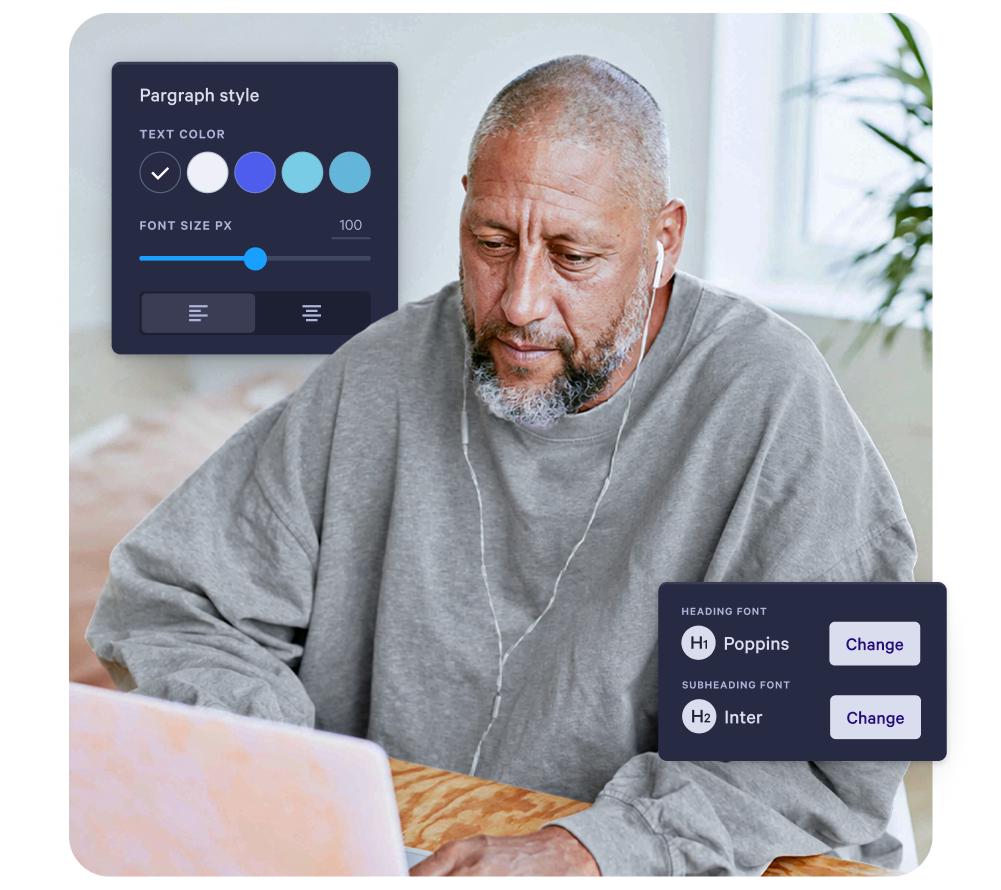
Drag-and-drop proposal editor
Drag and drop content from your library makes it easy for reps to build custom sales collateral without waiting on marketing. Templates lock the fixed elements (brand kit, positioning, pricing rules) and leave the open areas for reps to tailor (value prop, examples, personalisation).
Reps ship proposals in an afternoon, marketing keeps its focus on the library and campaigns.
Explore the editor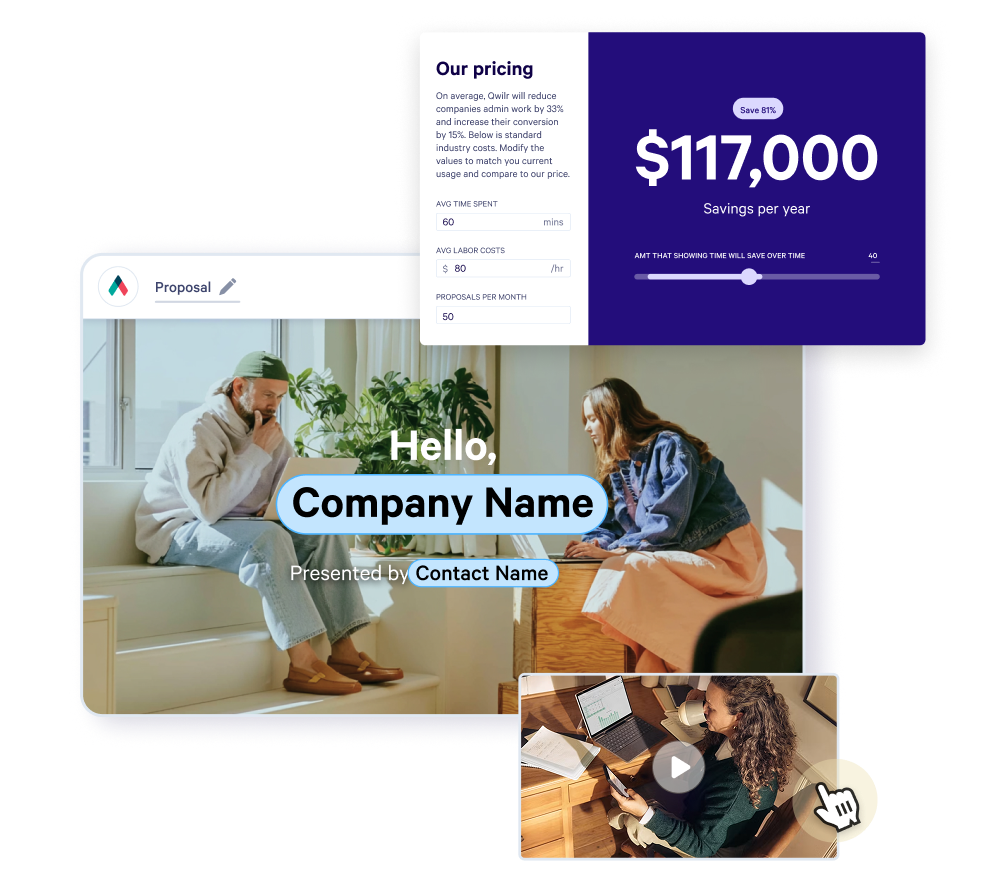
Personalised proposals from your CRM
Personalised proposals for your target accounts in a few clicks, powered by your CRM. Deal records trigger the right template with dynamic variables, so every proposal reflects the specific account or deal it's built for.
CRM integrations cover HubSpot, Salesforce, Pipedrive and Zoho, with Microsoft Dynamics, Monday.com and Attio coming soon.
Explore integrations
Proposal analytics with section-level engagement
Every proposal tracks which sections buyers read, skip and return to. Marketing can look across recent sends to see how the library is performing overall, section by section.
That data feeds the next content refresh, positioning update or messaging test. Content decisions get made against engagement rather than gut feel.
Explore analytics features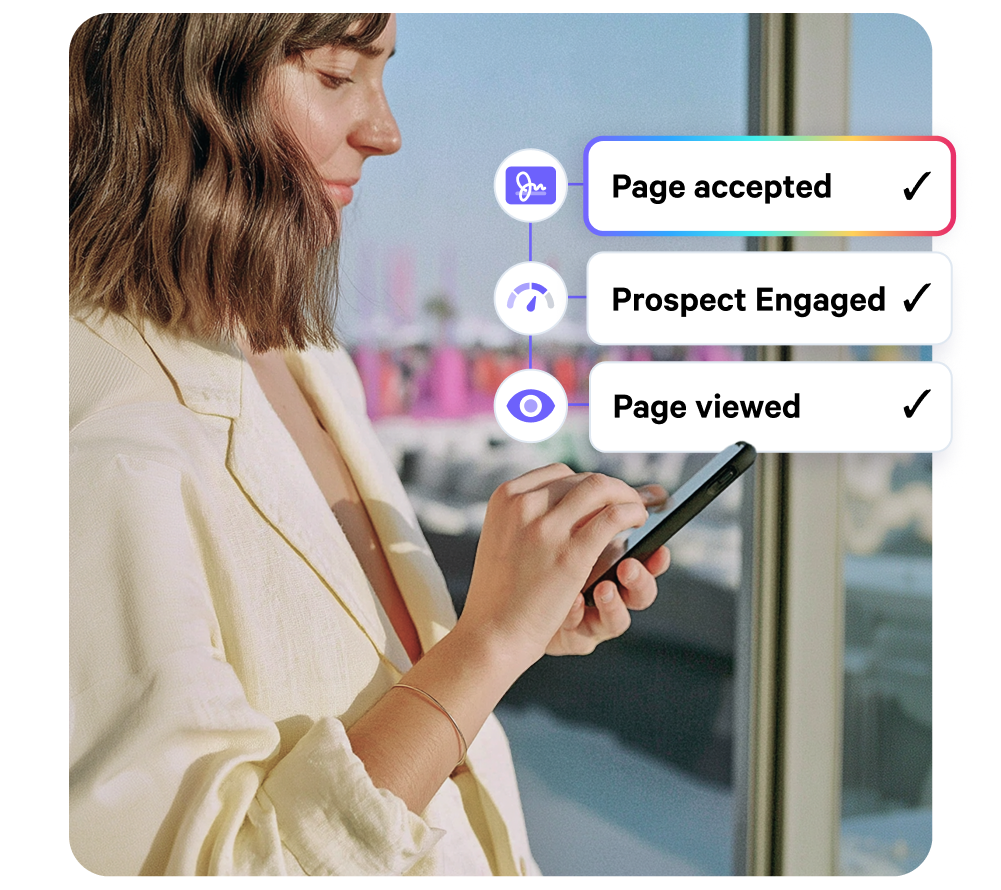
Why marketing teams prefer Qwilr
Consistent brand across the team
Brand happens by default once marketing sets it up.
- Brand kit and locked sections keep proposals on brand automatically
- Reps pull from your central content library every time
- Brand refreshes flow to every template with one update
Content performance data across proposals
Engagement signals across the whole content library
- Compare engagement patterns across the whole team and content library
- Read section-by-section engagement to spot what's landing and what needs a rewrite
- Feed the next content refresh with data instead of guesswork
Marketing time back from proposal requests
Reps build proposals from the library on their own
- Drag-and-drop editor pulls from your content library
- Reps build their own proposals from the library without needing a one-off
- Marketing time shifts from one-off decks to library and strategy
Proposal templates for marketing teams
Pre-built templates marketing can adapt into your content library.
Explore marketing templates

Make the case internally
For your sales team
"Will reps use it and stay on brand?"
Reps adopt Qwilr in their first day because the drag-and-drop editor is faster than editing PowerPoint decks.
The bit that matters for marketing: reps only touch the open sections.
Brand kit, positioning and legal terms stay locked, so the brand holds by design without anyone having to police every send.
For your finance team
"What does this cost, and what does it replace?"
Per-user pricing across three plans, with the Smart Proposal Engine and API priced on usage alongside the base.
The line that tends to land with finance is what stops needing paid separately: the collateral tool, the separate e-sign tool, the payment processor.
One line item replaces three or four.
For IT and security
"Will procurement clear this?"
Qwilr is SOC 2 Type II certified, GDPR ready and PCI DSS compliant on payment through Stripe, with SAML SSO and SCIM also available.
The native integrations replace custom dev work, so once the rollout is done the IT team isn't left owning a build.
For your CEO or founders
"Will this pay off?"
The team gets brand governance, engagement data and a rep-friendly editor in one platform.
That means revenue and brand stay aligned instead of pulling apart.
Over a decade in the category with 5,000+ teams on the platform makes this a stable long-term bet.
Questions asked my marketing teams
It's the category of software marketing uses to manage the sales content they produce: templates, brand kit, content library, and analytics on what buyers engage with.
Different from a CMS (which handles web content) or a proposal builder alone (which just outputs documents).
Sales enablement content platforms sit at the workflow between marketing building content and reps assembling and sending it.
Qwilr is one, focused on branded interactive proposals.
Marketing sets the brand kit once (typography, colours, logo usage, imagery) and it applies across every template.
Sections that need to stay consistent (positioning, product descriptions, legal terms) get locked. Reps tailor only the open areas: customer name, value prop, pricing, personalisation.
Every proposal that goes out reflects the brand marketing built, without marketing reviewing each send.
Yes. Templates and content blocks live in a central library.
When marketing updates the master template (new positioning, refreshed messaging, updated pricing), the change flows to every future proposal.
There's no chase for which version of the deck reps are using. New product launch?
Update the template once and every rep sees the new content the next time they build a proposal.
Every proposal records how buyers engage with each section: which they read, which they skip, which they return to. Marketing can look across the whole team and library to spot which sections and content types are pulling attention.
That's the pattern you use for the next content refresh. Data sits alongside the proposal timeline in your CRM.
Yes. Reps see the content library from log-in and drag any approved block into a proposal. What they can't edit are the locked sections (brand elements, positioning, legal terms, pricing rules), so a rep going fast still ships a proposal that reflects your brand.
When a rep needs something the library doesn't have, they request a new block from marketing, which is a much smaller ask than building a whole proposal from scratch.
Yes. Deal records in your CRM trigger the right template with dynamic variables (customer name, industry, deal value, line items).
For target accounts or account-based marketing campaigns, marketing builds account-specific templates that pre-fill from the CRM record.
Every proposal reflects the specific deal or account it's built for.
It's usually about brand control at the point of contact. Marketing invests in content and brand assets, but once a proposal leaves the library the consistency tends to drift.
Qwilr closes that gap: reps get a tool that's faster than PowerPoint, marketing gets a template layer that holds the brand in place without a review on every send.
Buyers see a branded web page instead of a PDF, and marketing gets block-level engagement data on every send. That mix of control, speed and insight is the buying trigger most marketing leaders describe.
Direct comparisons: Qwilr vs PandaDoc, Qwilr vs Proposify, Qwilr vs DocuSign.
Upload your brand kit once: typography, colours, logo variants, imagery library. Qwilr applies it across templates. Custom fonts and colour palettes are supported.
If you have a design system, marketing can build templates that mirror it, and lock the sections that shouldn't drift.
Premium design services on the Scale plan can also build your first branded template library for you.
Qwilr is priced per user across Starter, Growth and Scale plans.
Our Starter plan covers smaller teams getting consistent branded proposals out the door.
The Growth plan adds HubSpot, automations, custom branding and template control for sales teams running a standard proposal process.
The Scale plan adds Salesforce, AI Prefill and the Smart Proposal Engine for larger sales orgs with multiple regions or product lines. Every plan includes API access.
The API and the Smart Proposal Engine are priced on usage alongside the base plan, so teams only pay for what they use.
View our pricing page for more details.
Three places it is honestly not the right tool. Teams that need static brochure design outside a sales context tend to stay in InDesign or Figma.
Teams that only need a document e-signature step without proposal content find DocuSign leaner. One-off bespoke campaigns with hundred-page formal documents tend to stay in Word or InDesign.
For the sales collateral workflow (templates, content library, brand governance, engagement analytics), Qwilr is the tool for most mid-market marketing teams.